
Railway stations have a distinct role in their local economy and community. These profiles explore how individual stations across the network support employment, attract investment and enable development in their surrounding areas.
Drawing on the latest data, the profiles highlight trends in passenger demand, job growth and land use, alongside recent and planned development within walking distance of each station.
They provide a detailed analysis of how rail shapes local economies, showing not just the scale of impact, but how it plays out across the UK.
Reading station
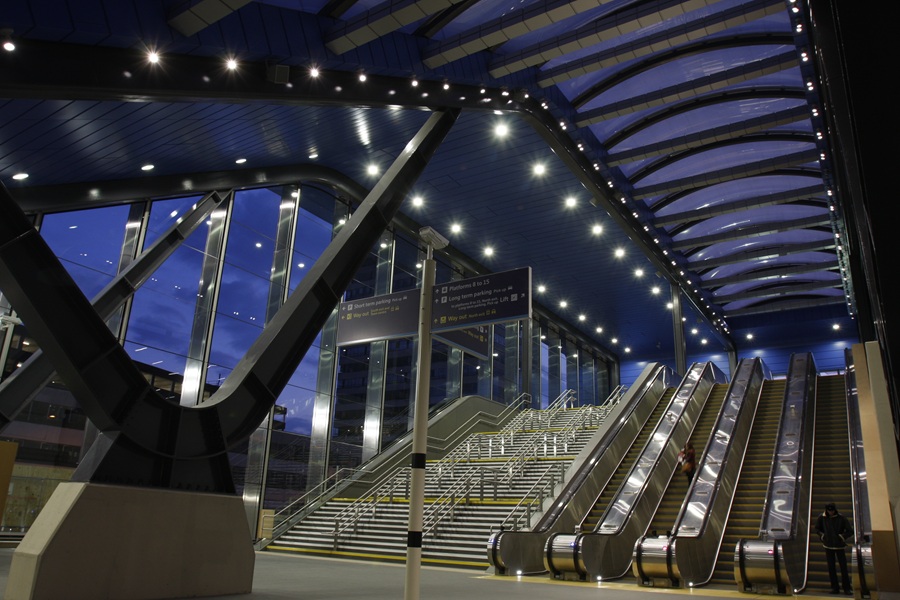
Reading station is a major transport hub for Berkshire and the Thames Valley, recording 14.3 million entries and exits in 2024/25, up 15.5% over two years. It is the fourth busiest Great Western Railway station and one of the three busiest in the South West.
Reading is also a significant employment centre, with jobs increasing from 113,000 in 2014 to 137,000 in 2023, (around 2% annual growth). Its economy is concentrated in rail-linked sectors including information and communications, professional and business services, retail and leisure.
Recent development near the station includes 27,500 sqm of office space and 9,500 sqm of retail floorspace at Station Hill. Around 600 homes have been delivered at Station Hill in the past five years, alongside 1,260 additional dwellings within 800 metres of the station, with a further 600 under construction. Over the next 5–10 years, just over 1,900 additional homes could be delivered in the area, representing a conservative estimate of future potential.
Oxford station
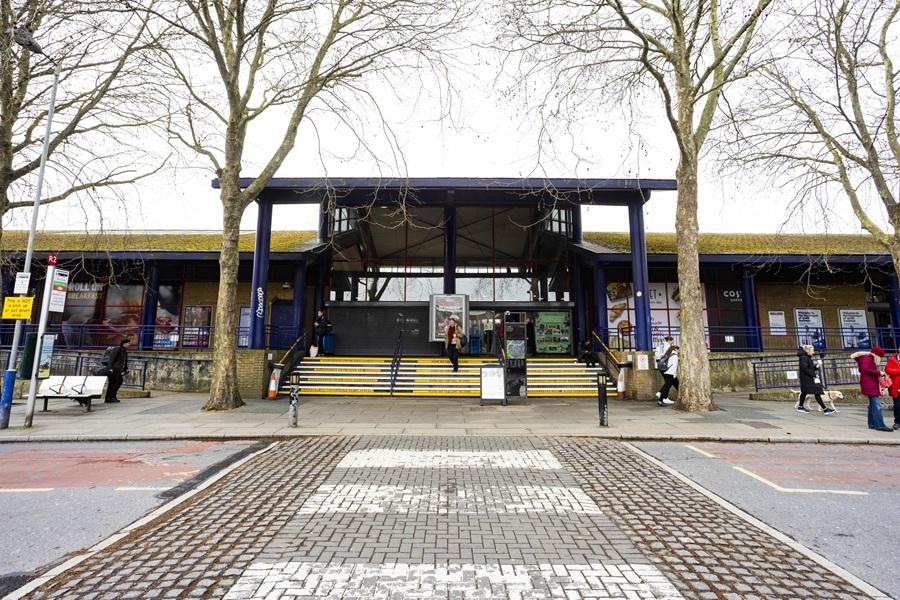
Oxford railway station is a key transport hub whose role will strengthen further with the opening of the East–West Rail link, improving connectivity to Milton Keynes and the West Coast Main Line, and in the longer term potentially to Cambridge as part of the Oxford–Cambridge growth corridor.
ORR data shows 8.1 million entries and exits in 2024/25, up 7.4% over two years, making Oxford the eighth busiest Great Western Railway station.
Employment in Oxford grew by around 10,000 jobs between 2014 and 2023 (approximately 7.5% growth). The economy is strongly education-led (32% of jobs, compared with under 9% regionally), alongside significant employment in healthcare, professional services and information services.
In the vicinity of the station, nearly 15,000 sqm of office and laboratory space has been delivered in the past five years, with a further 83,500 sqm permitted or proposed, plus around 350 hotel bedspaces. Around 180 homes have recently been completed or are under construction within 800 metres of the station, with a further 1,050 dwellings permitted or in the pipeline over the next 5–10 years.
Bristol Parkway station
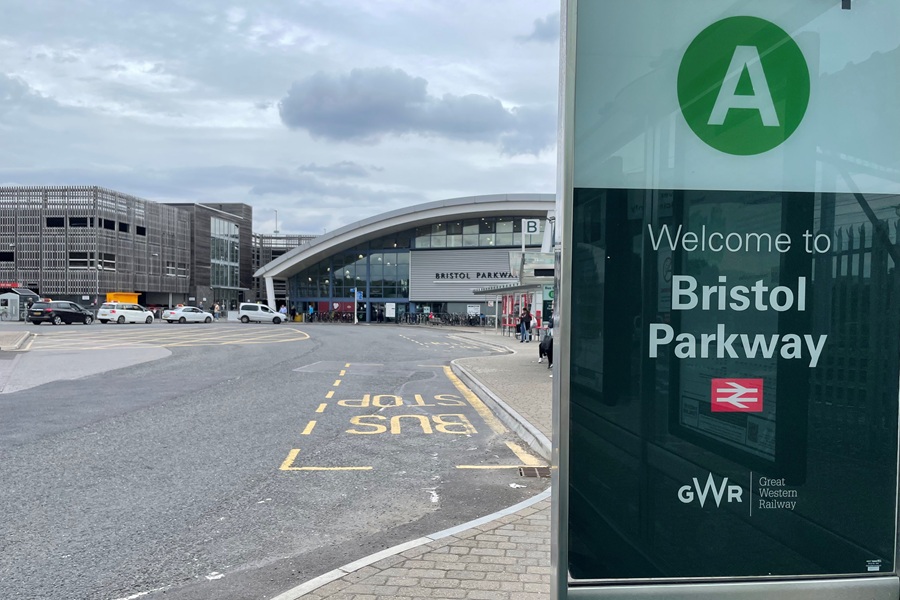
Bristol Parkway, opened in 1972 and expanded in 2001, 2007 and 2018, is located in South Gloucestershire within the Bristol city region. In 2024/25 it recorded 2.32 million entries and exits, up 8% over two years and 105% of pre-pandemic (2018/19) levels, making it the 24th busiest Great Western Railway station.
The station is central to proposals under the West Innovation Arc, linking Bristol & Bath Science Park with the major mixed-use Brabazon development at the former Filton Airfield. Plans are also being developed to transform the station itself.
Around 950 homes have been completed near the station over the past five years, with 240 under construction and a further 1,180 permitted or proposed over the next 5–10 years, largely around Harry Stoke, alongside supporting community facilities and new student accommodation for UWE.
Recent commercial development has mainly supported residential growth, but a station-area masterplan identifies capacity for approximately 20,000 sqm of office space and 5,000 sqm of leisure development.
Truro station
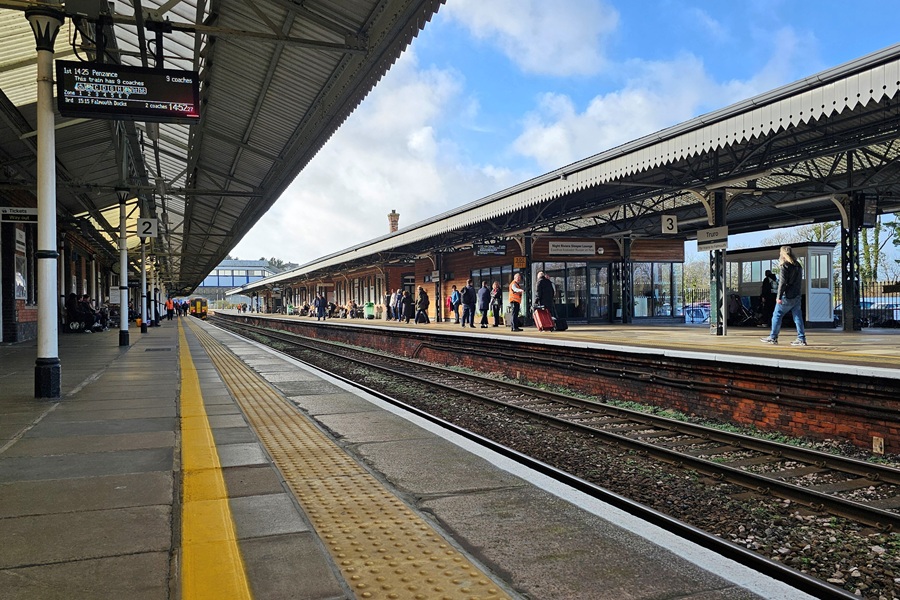
Truro, Cornwall’s administrative centre supported around 16,500 employee jobs in 2024, with healthcare, education and public administration accounting for 69% of employment (ONS BRES).
Truro station is the busiest in Cornwall and ranked 42nd among Great Western Railway stations. It recorded 1.33 million entries and exits in 2024/25, up 12.3% year-on-year and around 10% above pre-Covid levels. Recent investment includes a first-class and sleeper lounge, plus upgrades to the gateline and car park.
Limited recent commercial development has occurred near the station, although a proposed 400 sqm leisure scheme (food and drink) has been identified for the next five years. In addition, nearly 300 dwellings are permitted or proposed within 800 metres of the station over the next 5–10 years.
Moreton-in-Marsh station
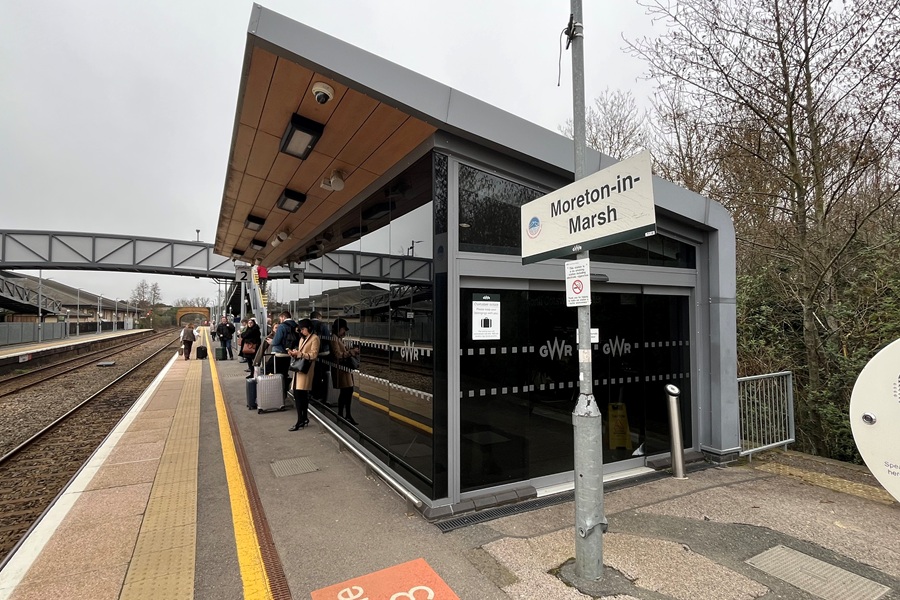
Moreton-in-Marsh supports around 4,850 employee jobs, with 26% in accommodation and food services, 18% in retail, and 12% in professional services (ONS BRES).
The station, on the Cotswold Line, provides direct services to London Paddington, Worcester and Hereford. It recorded 376,000 entries and exits in 2024/25, ranking 97th among Great Western Railway stations, with usage up 27% year-on-year (around 80,000 additional journeys) and more than 25% above pre-Covid (2019/20) levels.
No significant commercial development has recently occurred or is proposed within 800 metres of the station. However, around 70 homes have been completed in this area over the past five years, with a further 250 dwellings permitted or proposed.
Castle Cary station
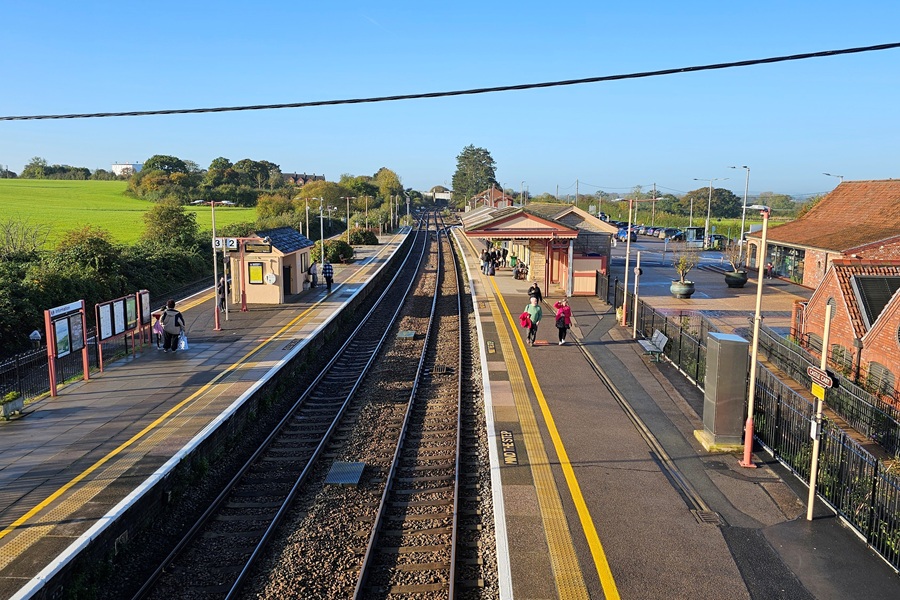
Castle Cary supported just under 1,300 jobs in 2024 (ONS BRES), with employment concentrated in retail (35%), health (14%), education (12%), and manufacturing (9%).
The station lies on the Reading–Taunton main line and the Heart of Wessex line (Bristol–Weymouth). It benefited from improved vehicle access and an expanded car park in 2024, with further interior upgrades planned for 2026. Usage reached 355,000 entries and exits in 2024/25, ranking 105th among Great Western Railway stations, up 14.5% year-on-year and 27% above pre-Covid (2019/20) levels. Demand is partly supported by the nearby Glastonbury Festival, with dedicated bus links from the station.
No significant commercial development has occurred or is proposed within 800 metres of the station. However, around 50 homes have been completed nearby in the past five years, with a further 435 dwellings permitted or proposed.
Marsh Barton station
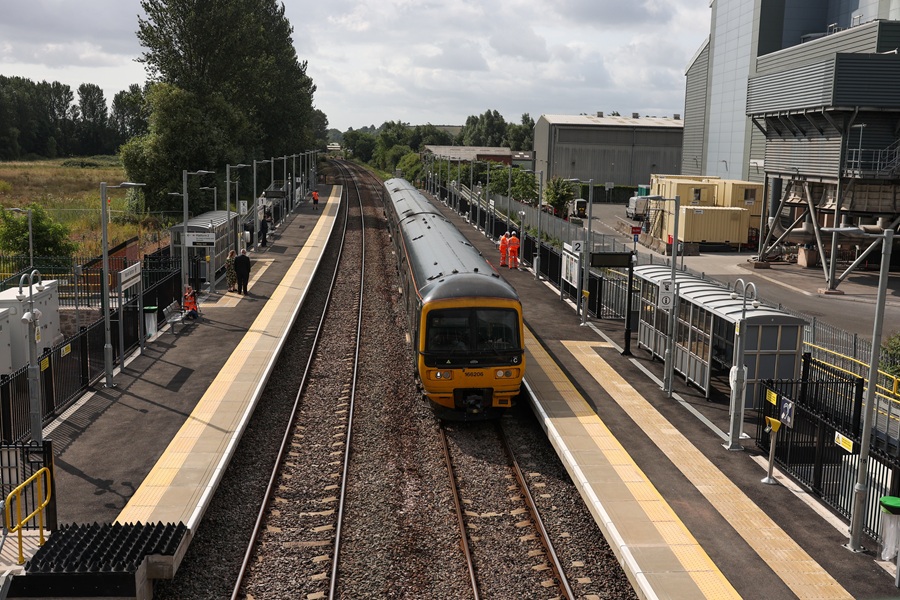
Marsh Barton is a new station on the Riviera Line (Exeter–Paignton), opened in July 2023. In its first full year (2024/25), it recorded 109,000 entries and exits.
The station serves one of Exeter’s key employment areas, including Marsh Barton Trading Estate and Matford Business Park, which together support around 9,500 jobs — approximately 10% of Exeter’s total employment base (ONS BRES, 2024).
Limited recent commercial development has occurred within 800 metres of the station, though around 1,500 sqm of office, retail and local service space is proposed. No recent housing completions were identified, but over 2,500 dwellings are proposed in the next 5–10 years, with a further 630 homes planned longer term.
Carmarthen station

Carmarthen, the county town of Carmarthenshire, supports around 17,650 jobs (ONS BRES, 2024). Employment is concentrated in healthcare, education and public administration (60%), alongside retail (15%) and professional services (5%).
The station, on the West Wales line, offers Great Western Railway services to London Paddington via Swansea and Cardiff, with additional direct services introduced in 2023, alongside Transport for Wales services. Usage reached 440,000 entries and exits in 2024/25, up 17.4% year-on-year and 21.5% above pre-Covid (2019/20) levels.
132 homes have been completed in this area over the past five years, with 18 under construction and a further 222 dwellings permitted or identified for development over the next 5–10 years.
Okehampton Interchange station
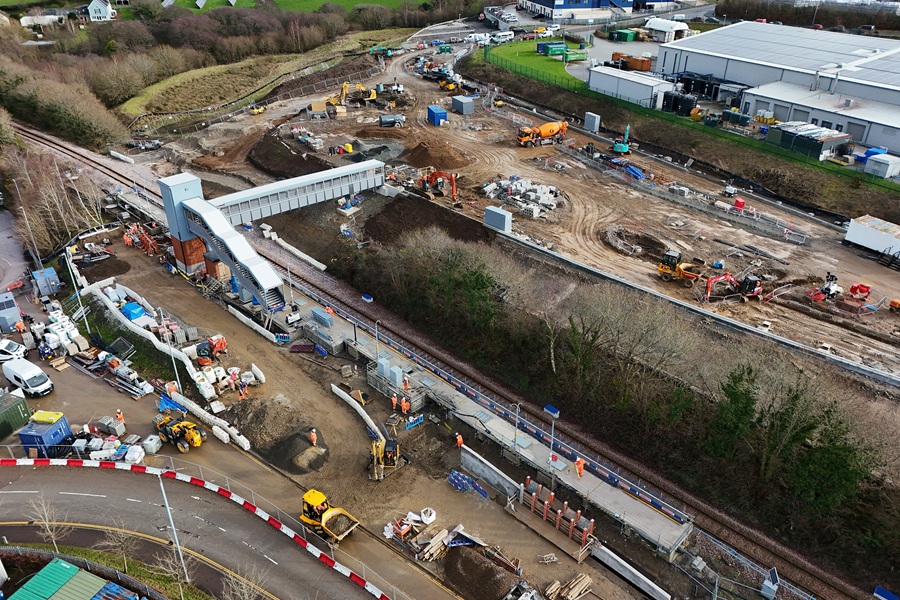
Okehampton Interchange is a new station under construction in the Stockley Hamlet area, east of Okehampton town centre, serving an area expected to accommodate significant housing growth. It will sit on the Dartmoor Line, which returned to Network Rail ownership in 2021, with services to the main Okehampton station reinstated in November 2021.
As the station has not yet opened, no usage data is available. However, the reopened Okehampton town centre station recorded 348,000 entries and exits in 2024/25.
In terms of housing, 378 dwellings have been completed nearby over the past five years, with 80 under construction and a further 362 dwellings permitted or identified for development over the next 5–10 years.
Bristol Brabazon station
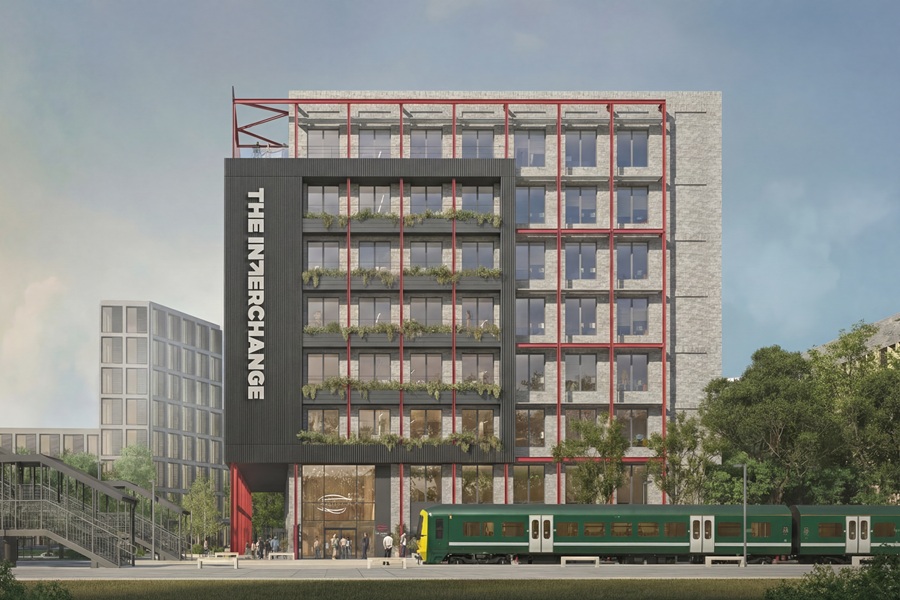
Brabazon station is a new station under construction, due to open in November 2026, serving the Filton area and the major redevelopment of the former Filton Aerodrome site. It effectively replaces the former North Filton station (closed in 1964). The project forms part of wider investment on the Henbury Line — including new stations at Henbury and Ashley Down — and sits within the broader MetroWest rail strategy for the Bristol city region.
The Brabazon (Filton Aerodrome) redevelopment is a large mixed-use scheme. Over the past five years this has delivered around 12,300 sqm of office space, 3,000 sqm of retail floorspace, and circa 500 homes.
Further development underway or planned includes approximately 270,000 sqm of offices and laboratories, 55,000 sqm of industrial space, a 17,000+ capacity YTL Bristol Arena, around 6,500 dwellings, and 25,000 sqm of supporting retail and commercial space. The 2024 Masterplan indicates the completed development could support over 30,000 jobs.